
Disc Injury Chiropractor in Prosper, TX
Disc injuries can sound intimidating, but not every disc finding causes pain—and not every episode of back or neck pain is caused by a damaged disc. At Helix Care, Dr. Scott Wright combines a thorough examination with movement assessment to better understand what's contributing to your symptoms before creating a personalized treatment plan.
A Note From Dr. Wright
"One of the most common concerns patients have when they visit my office is hearing they have a 'bulging' or 'herniated' disc. These words can sound scary, and it's easy to assume the worst."
"What I've learned over nearly 17 years in practice is that MRI findings are only one piece of the puzzle. Some people have disc changes on an MRI but experience no pain at all, while others have significant symptoms with very little visible on imaging."
"My responsibility is understanding the whole person—not just the MRI report. Your movement, strength, mobility, neurological findings, and daily function all matter. By focusing on how your body moves and functions, we can create a plan that addresses your symptoms and helps you regain confidence in your body."
— Dr. Scott Wright
Understanding Disc Injuries
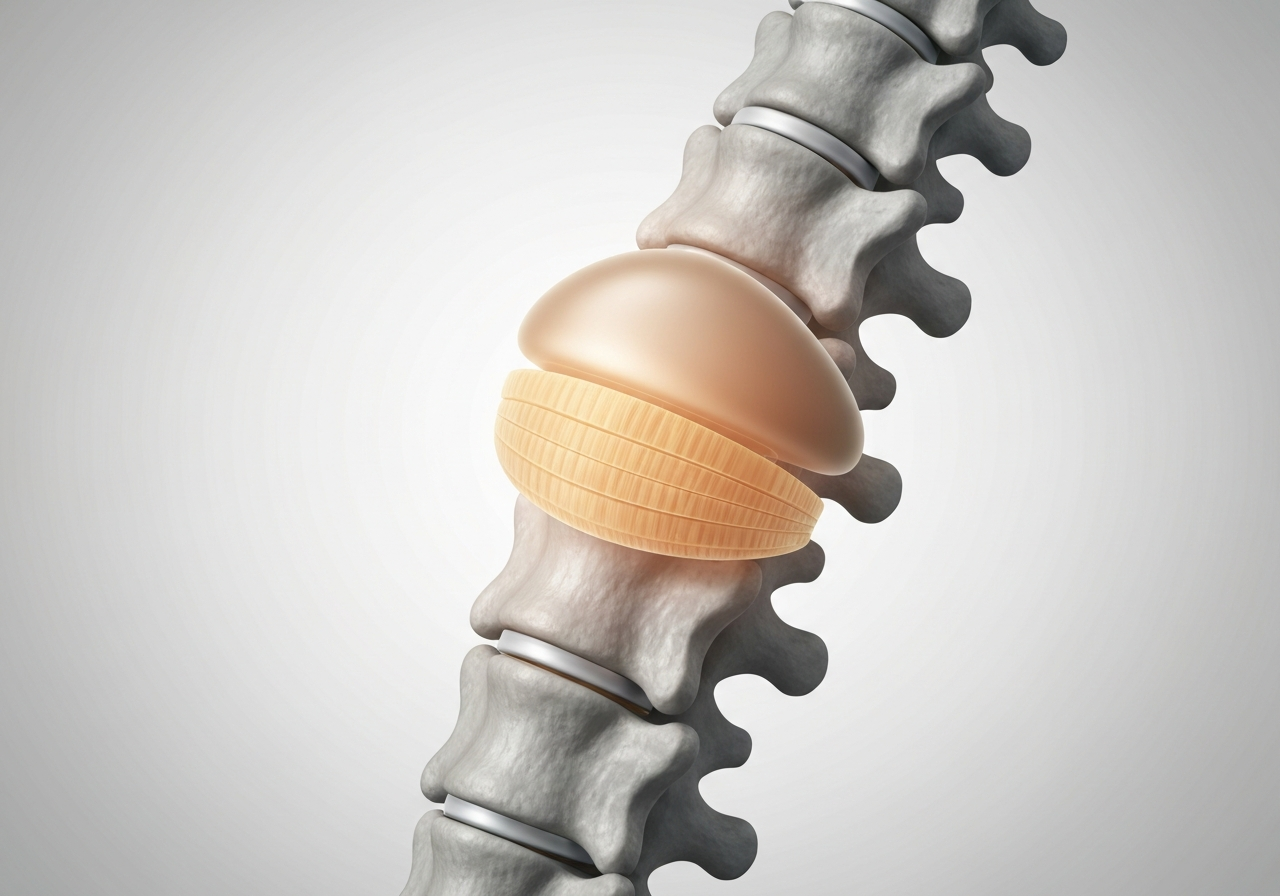
Your spine is made up of individual bones called vertebrae, and between each of these bones sits an intervertebral disc. You can think of these discs like jelly doughnuts: they have a tough, fibrous outer ring and a softer, gel-like center. These discs act as shock absorbers, allowing your spine to bend, twist, and move comfortably.
Disc Bulges vs. Herniations: Over time, or due to injury, the outer layer of the disc can weaken. A disc bulge occurs when the disc flattens and extends beyond its normal boundaries, much like a hamburger patty that's too big for its bun. A disc herniation happens when the tough outer layer actually tears, allowing the soft inner gel to push out.
Nerve Irritation: The spine is closely surrounded by sensitive nerves. If a bulging or herniated disc presses against one of these nerves, or if the inner gel causes localized chemical inflammation, it can result in pain, numbness, or weakness that travels down your arm or leg.
Age-Related Changes: It is completely normal for discs to change as we age. They naturally lose some of their water content, becoming less flexible and narrower. This is a normal part of aging, much like getting wrinkles, and does not automatically mean you will experience pain.
Natural Recovery: The human body is remarkably resilient. In many cases, the inflammation surrounding a disc injury will subside, and the herniated material can be resorbed by the body. With the right conservative care and movement strategies, many patients recover fully without the need for surgery.
Common Symptoms
Symptoms can vary widely depending on which disc is injured, the severity of the injury, and whether nearby nerves are affected.
Localized Back Pain
Aching, stiffness, or sharp pain near the affected disc, often worsening with bending or sitting.
Leg Pain
Pain radiating down the back of the leg (sciatica), often described as sharp or shooting.
Neck Pain
Discomfort or stiffness in the cervical spine if the disc injury is located in the neck.
Arm Pain
Radiating pain, aching, or burning sensations traveling into the shoulder, arm, or hand.
Numbness or Tingling
A 'pins and needles' sensation in the extremities resulting from nerve irritation.
Muscle Weakness
Reduced strength in the affected arm or leg, sometimes causing difficulty lifting or walking.
Pain While Sitting
Increased pressure on the lumbar discs during prolonged sitting can aggravate symptoms.
Pain With Certain Movements
Specific motions, such as bending forward, twisting, or lifting, often trigger sharp discomfort.
How Dr. Wright Evaluates Disc Injuries
A thorough evaluation is critical when a disc injury is suspected. Drawing on nearly 17 years of clinical experience, a background in Exercise & Sport Sciences, and extensive postgraduate training in Functional Neurology, Dr. Wright performs a comprehensive assessment that looks far beyond imaging alone.
Your evaluation begins with a detailed health history to understand how and when your symptoms started. This is followed by a movement assessment to observe your posture, walking mechanics, and functional mobility. We want to see how your body is compensating for the pain.
We also conduct specific orthopedic testing and a neurological examination to assess your reflexes, strength, and any signs of nerve irritation. This comprehensive approach helps us understand exactly how the injury is impacting your function.
Treatment recommendations are based on this thorough clinical examination rather than just an MRI report, ensuring your care is personalized to your specific symptoms and functional goals.
Personalized Treatment Approach
Based on the findings of your evaluation, we develop a personalized treatment plan utilizing a combination of evidence-informed therapies to support healing and restore function.
Chiropractic Adjustments
Targeted techniques to help restore proper joint motion, reduce stiffness, and improve nervous system function when appropriate.
Myofascial Release
Hands-on soft tissue therapy to address muscular tension, fascial restrictions, and trigger points.
Rehabilitation Therapy
Focused exercises designed to correct movement dysfunction and support long-term recovery.
Therapeutic Exercise
Personalized strengthening and mobility routines to build stability and prevent future flare-ups.
Movement Education
Helping you understand your body mechanics to improve posture and reduce daily physical stress.
Home Recommendations
Guidance on ergonomics, activity modification, and daily habits to support your healing process.
When Should You Seek Immediate Medical Care?
While conservative care is highly effective for many disc injuries, some symptoms indicate a medical emergency that requires immediate attention. You should seek urgent medical evaluation if you experience:
- • Loss of bowel or bladder control
- • Progressive muscle weakness in the legs
- • Numbness in the "saddle" area (groin/inner thighs)
- • Rapid neurological changes
- • Symptoms following significant trauma
Patient safety always comes first. If during your evaluation Dr. Wright determines that your symptoms require urgent medical attention or a surgical consultation, he will promptly refer you to the appropriate specialist.
Frequently Asked Questions
Disc Injury Chiropractic Care Near Prosper, Celina & McKinney
Helix Care Chiropractic and Wellness is dedicated to helping patients throughout North Texas understand and manage disc-related symptoms. Conveniently located in Prosper, we regularly provide personalized, movement-based care for individuals from Celina, McKinney, Frisco, Little Elm, and Weston.
Whether you are dealing with a recent injury or ongoing discomfort, our goal is to offer evidence-informed conservative care that helps you regain mobility, reduce pain, and confidently return to the activities that matter most to you.
Let's Better Understand What's Causing Your Symptoms
If you've recently been told you have a disc injury—or you're experiencing symptoms that may be related to one—a thorough evaluation can help determine how your condition is affecting movement and what conservative treatment options may be appropriate for your situation.